|
||||||||||||||||||||||||||||||||||||||||||||||
AUTISM SPECTRUM DISORDERSAN ALTERNATIVE AND COMPLEMENTARY MEDICINE RESOURCE GUIDE From the Alternative Medicine Foundation, Inc
|

 |
Introduction |
 |
Books |
 |
Journals and Articles |
|
Professional Organizations |
 |
Research, Self-help & Referral Organizations |
|
Research Centers |
|
Treatment & Testing Centers |
|
Government resources |
|
Web Resources |

Autism is a lifelong developmental disorder that affects a person's ability to communicate and relate to others, thereby impairing learning and social skills. There has been a sharp increase in the number of children classified as having an Autism Spectrum Disorder since it was officially recognized as a special education category in 1991. Until fairly recently, most texts reiterated the long-accepted rate of up to 4 to 5 in 10,000; in February of 2007 the Centers for Disease Control (CDC) updated the official incidence rate to 1 in 150 from the previously reported 1 in 166 (see CDC on Autism and special education statistics in Fighting Autism). However, it was debated how far this increase is due to an actual rise in prevalence, or whether it reflects the change in how we identify learning problems. Many suggested that broadened definitions of the spectrum, plus the addition of this diagnostic category to the American education system, and the potentially resulting incentives of both, created a false appearance of increased prevalence (see anthropologist--and parent of an autistic teenager--Roy Grinker‘s Unstrange Minds: Remapping the World of Autism). Others insisted that it was necessary to add these diagnostic categories because more and more children were presenting with this peculiar set of symptoms, behaviors, and learning needs. Some felt that it was a combination of both. With the recent adjustment of the figure to 1 in 150 based on strict criteria, media reports increasingly seem to accept the phenomenon as real.
Autism Spectrum Disorders are diagnosed on the basis of three primary deficits: impairment in communication skills; impaired social interactions; and restricted or repetitive and stereotyped patterns of behavior, often aggravated by over- or under-reactivity to sounds, touch, and other environmental stimuli. People with these disorders carry a wide array of severe to mild symptoms, therefore treatments must be tailored to individual need.
There does exist a gray area at the highest functioning end of the spectrum, on a human continuum between clinical impairment and "normal" functioning, where diagnosis can become more sticky and subjective, even for seasoned professionals. Is the impairment real, or perceived? And are health professionals, including those working in integrative/complementary/alternative methods, encouraging too much pathology in an effort (well-meaning or otherwise) to promote these treatments?
New findings may help resolve questions of diagnosis. Research is uncovering possible biological markers for autism such as differing immune system responses (UC-Davis M.I.N.D. Institute), brain abnormalities and the rate of head circumference growth in infants (UCSD Autism Center of Excellence), and genetic anomalies (USC/Vanderbilt and Yale).
Terms:
For simplicity, this Guide will refer to Autism Spectrum Disorders as ASD. These include the Pervasive Developmental Disorders as described in the Diagnostic and Statistical Manual of Mental Disorders, Fourth Edition - Text Revision (DSMIV-TR): autistic disorder; pervasive developmental disorder not otherwise specified (PDD-NOS); Rett's syndrome; childhood disintegrative disorder (CDD) or Heller's syndrome; and Asperger's syndrome, sometimes referred to as high-funtioning autism (HFA) or "non-verbal learning disorder", as it does not involve significant language delays or cognitive impairment. (The young narrator of Mark Haddon's 2004 best-seller, The Curious Incident of the Dog in the Night-Time, provides an accurate, albeit fictional, example of a person with Asperger's.) Other related terms are multi-system developmental disorder (MSDD, per Zero to Three diagnostic manual classification) and semantic-pragmatic language disorder (a term more commonly used in the UK ). Some of the resources listed below might also apply to Fragile X syndrome and hyperlexia. There is also some overlap with attentional disorders, but these problems have a separate literature and their own professional, research, and self-help organizations.
CAM signifies the collective complementary/alternative medicine modalities and therapies.
Why families and caregivers of persons with ASD seek CAM:
There is no agreed cause of autism and, to date, no cure (though reports exist of significant recovery through various combinations of mainstream and CAM treatments). Available drug therapies at best only alleviate some of the symptoms, and sometimes cause undesirable side-effects. Research on behavioral therapies is promising, but even the most established methods do not work well for some patients. At the same time, autism specialists and literature emphasize intensive, early intervention to achieve the best outcomes. Parents of young or newly-diagnosed children with autism often feel there is no time to wait for the science to prove the effectiveness of a particular treatment. They are racing the clock to take advantage of early childhood neuro-plasticity, and are willing to try CAM treatments, especially those that are non-invasive and without harmful side-effects. Alternative and Complementary therapies used for ASD include:
- special diets
- chelation
- cranio-sacral therapy
- music therapy
- auditory integration therapy
- hippotherapy
- sensory integration therapy
- hyperbaric oxygen therapy
- traditional Chinese medicine and acupuncture
See also the NOTE to section on Professional Organizations below.
Many alternative treatments that have attracted attention since the 1990's (when families started turning to the Internet for support and to learn of the latest treatment options), had highly positive anecdotal results. Even when success occurred in only a small portion of patients, people were willing to try the therapies due to this sense of urgency combined with the lack of effective conventional medicines for autism. Though a cure or major breakthrough may be the hoped-for result, many find these CAM interventions worthwhile so long as they lessen ASD symptoms. Research is beginning to identify immune dysfunctions and other subtle biological abnormalities, and their genetic underpinnings, that affect the brain in individuals with ASD. Holistic treatment approaches attempt to address these issues to enhance overall functioning. Some believe they render other conventional therapies and educational programs more effective; others allege that they interfere with them and confuse research results.
CAM vs. novel, experimental, "off-label" or unapproved uses of otherwise conventional drugs/treatments:
Treatments for ASDs come from a very wide range of disciplines. Sometimes even 'off-label' use of conventional drugs is applied to autism, that is, the drug is approved but not for use in this disorder or for patients of/under a certain age. These treatments, while novel, are not necessarily CAM , but information on a few is included in this guide because they are so widely spoken and written of in autism circles.
From CAM to nearly mainstream:
Some treatments for ASD that were considered 'alternative', or 'fringe' a decade or more ago have become standard protocol for ASD. For example, a gluten- and casein-free (gf/cf) diet is widely utilized (or at least tried) in this population, especially now that it is easier to find gf/cf foods, and since the publication of a popular book describing how the diet played a key role in the remarkable progress of one child with ASD (Seroussi, listed below). Most occupational therapists who work with individuals with autism are well-versed in sensory integration therapy (SI), recognizing varied ways in which persons with ASD seek sensory input to try to 'fix' the sensory processing disorders that render them under- or over-reactive to sounds, lights, gravity, touch, smells and/or tastes, etc. Now speech therapists, teachers, and other practitioners take training in SI as well. These approaches have earned a mainstream place in therapy programs for individuals with ASD, often even being included in school IEPs (the Individualized Education Program required by law for children with special education needs). Similarly, a few years ago if one ran a search in PubMed (See Gov't. Resources below) on "autism AND alternative medicine", most of the resulting citations came from the field of music therapy. Now more and more music therapists are employed at schools and treatment facilities.
Autism and Vaccine Controversy:
The role of certain childhood immunizations in the increase of ASD incidence has been a hot-button issue in recent years. While the Institute of Medicine (IOM) concluded in 2004 that there was no link, some autism advocacy and vaccine information /reformation groups have criticized the IOM report and questioned the Institute's credibility and objectivity (as detailed in David Kirby's 2005 book, Evidence of Harm). Families affected by autism who believe vaccines played a role may join the debate or leave it to the scientists. However, most continue to seek unconventional treatments, including those that address possible adverse effects of vaccines, such as mercury toxicity resulting from exposure to the preservative thimerosal (containing 49.5% ethyl mercury) found in most childhood vaccinations up to 2001. (In the U.S., all childhood vaccines are now administered in thimerosal-free forms - with the exception of some flu shots - as the last vaccine supplies containing this preservative expired in 2003.) Several studies have since been conducted in an effort to determine whether thimerosal is accumulated in the body and whether it poses a potential threat to infant development. The National Institute of Allergy and Infectious Diseases summarized these studies in a fact sheet on the NIAID web site. The Alternative Medicine Foundation aims always to remain impartial while believing in the public's right to CAM information, therefore we include resources related to this issue.
Research studies by the University of Texas Health Science Center at San Antonio found increases in the autism rate for every 1,000 pounds of mercury released into the environment from coal-burning power stations. This provides a new twist to the mercury debate. (See Palmer, et al., 2009 and 2006 studies, under Journal Articles below.)
NOTE: Some of the most effective treatments for ASD are educational and behavioral programs and are not covered here. Information and further links are available on the Autism Education Network. The number of information web sites for autism and related disorders has grown rapidly in the past several years. This Guide does not attempt to be comprehensive but to offer selected key resources and web sites with CAM-related content that will lead you to others.
For additional relevant alternative and complementary resources, see our Resource Guides on:
NOTE: The following resource listings are not intended to be comprehensive, nor to be used as a guide for treatment. They are provided for information only. The resources are selected and categorized to help you with your own research:
Note: some standard and important texts have been included which do not particularly fall under the realm of CAM, but which support the choice to try
AUTHORITATIVE RESEARCH RESOURCES
 |
Bryan Jepson, M.D. Changing the Course of Autism: A Scientific Approach for Parents and Physicians Sentient Publications, 2007 Demonstrates how autism can be treated as a medical disease, rather than a behavioral disorder, by reducing neurological inflammation and thereby reducing autistic behaviors. |
 |
Sidney Baker, M.D. Detoxification and Healing: The Key to Optimal Health McGraw-Hill, Rev. ed., 2003 How to measure the body's toxic load and promote cleansing of both environmental and self-generated poisons. |
 |
Bernard Rimland, Ph.D. Infantile Autism: The syndrome and its implications or a neural theory of behavior Authoritative text by research psychologist/parent of an autistic child demonstrating the biological basis for the disorder. Rimland, founder and director of the Autism Research Institute (see Organizations below) was a longtime advocate of vitamins, nutritional supplements, and other complementary treatments. |
CASE STUDIES/OBSERVATIONAL DATA
 |
Kenneth Bock, M.D., and Cameron Stauth Healing the New Childhood Epidemics: Autism, ADHD, Asthma, and Allergies: The Groundbreaking Program for the 4-A Disorders Ballantine Books, 2008 Breaks down complex biomedical concepts in a guidebook for the reader. Through case studies, Dr. Bock seeks to find and treat the root cause of illness rather than its symptoms, applying nutritional and medical therapy to reduce toxin load and help the body heal itself. |
 |
Kenneth J. Aitken Dietary Interventions in Autism Spectrum Disorders: Why They Work When They Do, Why They Don't When They Don't Jessica Kingsley Publishers, 2008 Many different diets have been suggested and parents/carers can waste time and money trying the wrong diet. The author reviews current scientific evidence for a variety of diets combined with practical advice on the application of such interventions. |
 |
Carol Stock Kranowitz The Out-of-Sync Child: Recognizing and Coping with Sensory Processing Disorder Perigee Trade, Rev. ed., 2006 Describes a condition in which the central nervous system misinterprets messages from the senses. First published in 1998, the new edition features information from recent research on motor skill problems, ADHA, autism, and other related disorders. |
 |
Stephen M Edelson, Ph.D. and Bernard Rimland, Ph.D. (Eds.) Recovering Autistic Children Autism Research Institute, 2006 Extensively updated revision of "Treating Autism" (2003), following in-depth stories written by 31 parents and doctors who have used the Defeat Autism Now (DAN!) biomedical treatments recommended by the Autism Research Institute. |
 |
Jacquelyn McCandless, M.D. Children With Starving Brains: A Medical Treatment Guide for Autism Spectrum Disorder, Second Edition Bramble Books, 2nd edition 2005 Gives a step-by-step treatment guide for parents and doctors based on the belief that ASD is a complex biomedical illness resulting in significant brain malnutrition. Describes important diagnostic tools needed to select appropriate treatment programs, explains newly available major therapies, and identifies safe and effective options. |
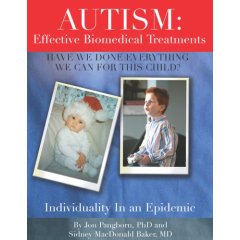 |
Jon Pangborn Ph.D., Sidney M Baker M.D., Bernard Rimland Ph.D. Autism: Effective Biomedical Treatments (Have We Done Everything We Can For This Child? Individuality In An Epidemic) Autism Research Institute, 2005 A 2007 supplement is also available on Amazon or through the Autism Research Institute web site: http://autismstore.dyndns.org/Books-supplement_to_Effective_Biomedical_Treatments.html. |
 |
William Shaw, Ph.D. Biological Treatments for Autism & PDD Sunflower Publishing; 2nd Rev. ed., 2001 Integrates information from the fields of biochemistry, immunology, genetics, nutrition, and microbiology into a guide to antifungal and antibacterial therapies, gluten and casein restriction, homeopathy, vitamin therapy, gamma globulin treatment, transfer factor therapies, treatment of food allergies, and alternatives to antibiotic therapy. |
 |
Karyn Seroussi Unraveling the Mystery of Autism & Pervasive Developmental Disorder: A Mother's Story of Research and Recovery Simon & Schuster, 2000 A family's quest to treat a son with autism, detailing how a gluten and casein-free diet greatly enhanced his progress. |
 |
Lisa Lewis, Ph.D. Special Diets for Special Kids Future Horizons, 1998 Understanding and implementing special diets to aid in the treatment of autism and related developmental disorders. |
 |
Doris Rapp, M.D. Is This Your Child? Perrenial Currents, 1st Quill Edition, 1992 Classic work by a pediatric allergist and environmental medicine specialist detailing how one can detect and treat food, chemical and allergen sensitivities. Although the P/N method described involving pinprick tests can now be bypassed with a blood sample sent to a lab, this text is still relevant for parents of the sickly, hyperactive, irritable, learning and/or behaviorally impaired child. |
 |
A. Jean Ayres, Ph.D. Sensory Integration and the Child Western psychological Services, 1979 The classic text introduces the concept of sensory integration dysfunction and how it can affect children--from mild learning problems to autism. Forerunner of many books on SI. |
AUTHORITATIVE RESEARCH:
Autism: The International Journal of Research and Practice
http://aut.sagepub.com/
Sage Publications in association with the National Autistic Society, London
Journal of Autism and Developmental Disorders
http://www.springerlink.com/content/104757/
Kluwer Academic Publishers
http://www.alternative-therapies.com/
InnoVision Communications
Recent important reviews/reports of research on oxidative stress and mercury toxicity in ASD.
KEY ARTICLES:
Geier DA, Kern JK, et al. "Biomarkers of environmental toxicity and susceptibility in autism." Journal of the Neurological Sciences, 2009 May 15;280(1-2):101-8. .Palmer, RF, Blanchard S, Wood, R. "Proximity to point sources of environmental mercury release as a predictor of autism prevalence." Health and Place, 2009 Mar;15(1):18-24.
Blaylock, RL. "A possible central mechanism in autism spectrum disorders, part 1." Alternative Therapies in Health & Medicine, 2008 Nov-Dec;14(6):46-53.
"A possible central mechanism in autism spectrum disorders, part 2: immunoexcitotoxicity." Altern Ther Health Med, 2009 Jan-Feb;15(1):60-7.
"A possible central mechanism in autism spectrum disorders, part 3: the role of excitotoxin food additives and the synergistic effects of other environmental toxins." Altern Ther Health Med, 2009 Mar-Apr;15(2):56-60.
Boso, M; Emanuele, E, et al. "Effect of long-term interactive music therapy on behavior profile and musical skills in young adults with severe autism." Journal of Alternative and Complementary Medicine 2007 Sept;13(7):709-12.
Hanson E, Kalish LA, et al.: "Use of Complementary and alternative medicine among children diagnosed with Autism Spectrum Disorder." Journal of Autism & Developmental Disorders 2007 Apr;37(4):628-36.
Palmer, RF; Blanchard, S et al. "Environmental mercury release, special education rates, and autism disorder: an ecological study of Texas." Health and Place 2006 Jun;12(2):203-9. Can be ordered through Science Direct.
James, SJ., Slikker III, W, et al.: "Thimerosal neurotoxicity is associated with Glutathione depletion: protection with glutathione precursurs." Neurotoxicology, 2005 Jan;26(1):1-8. Full article at: http://www.icdrc.org/pdf/Neurotoxarticle.pdf
James, SJ. Jill, et al. "Metabolic biomarkers of increased oxidative stress and impaired methylation capacity in children with autism." American Journal of Clinical Nutrition 2004 80:1611-1617. Abstract and full text article are available on the journal's web site.
McGinnis, WR. "Oxidative Stress in Autism." Alternative Therapies, 2004 Nov/Dec;10(6): 22-36.
Kidd, PM. "Autism, an extreme challenge to integrative medicine. Part I: The Knowledge Base." Alternative Medicine Review, 2002 Aug 7(4): 292-316.
and "Part 2: Medical Management." Alternative Medicine Review, 2002, Dec; 7(6):472-99.
Unis, AS et al. "A randomized, double-blind, placebo-controlled trial of porcine versus synthetic secretin for reducing symptoms of autism." Journal of the American Academy of Child & Adolescent Psychiatry. 2002 Nov 41(11):1315-21.
Megson, M N. "Is autism a G-alpha protein defect reversible with natural vitamin A?" Medical Hypotheses. 2000 Jun;54(6):979-83.
CASE STUDIES/OBSERVATIONAL DATA:
Autism Asperger's Digest Magazine
http://www.aspergersdigest.com/
Future Horizons Publications
Featuring original articles and material from sources around the world, covers the latest people, products, research, news & viewpoints emerging in the autism field.
Autism Spectrum Quarterly
http://www.asquarterly.com/
Autism Asperger Publishing Company
Tel: (860) 635-2906
Email: info@ASQuarterly.com
Articles by, for, and about individuals with ASD with a focus on family issues, with a Best Practices section, tips and strategies, book reviews, recommended resources, contributions by ASD professionals; includes some CAM-related topics.
Schafer Autism Report
http://www.sarnet.org/
Lenny Schafer began searching for and combing through autism articles in sources worldwide from newspapers to medical journals for a national e-newsletter in the early 1990's. The highly-regarded report is now available on Schafer's own site.
NOTE: ASD treatments span many disciplines. See our list of available information Resource Guides under Modalities, and go to the sections on professional member organizations within each to find practitioners in craniosacral therapies (manual therapies guide), homeopathy, naturopathy, osteopathy, herbal medicine, etc. CAM therapies used in the treatment of ASD include dietary inverventions with customized supplements and enzymes to aid digestion for food intolerances; chelation of toxic metals; cranio-sacral therapy; music therapy; auditory therapies to address central auditory processing and sound sensitivity problems; hippotherapy; and sensory integration therapy to address low muscle tone and disordered sensory processing.
The organizations listed below cover general integrative medical professionals and additional therapeutic modalities not covered in any of the other currently available guides.
American Association of Naturopathic Physicians (AANP)http://www.naturopathic.org/
Toll-free: (866) 538-2267
Tel: (202) 237-8150
Fax: (202) 237-8152
Email: member.services@naturopathic.org
This organization represents the naturopathic physicians from the four recognized schools of naturopathy - see Herbal Medicine Resource Guide. The web site contains a physician referral listing, searchable databases of information and resources on natural healing by licensed Naturopathic Doctors.
American Holistic Medical Association (AHMA)
http://www.holisticmedicine.org
23366 Commerce Park, Suite 101B
Beachwood, OH 44122
Tel: (216) 292-6644
Fax: (216) 292-6688
Email: info@holisticmedicine.org
This organization includes allopathic and osteopathic physicians who practice medicine that acknowledges the interrelationship of body, mind, and spirit. AHMA provides listings of physicians who practice integrative medicine.
American Music Therapy Association (AMTA)
http://www.musictherapy.org/
Tel: (301) 589-3300
Fax: (301) 589-5175
Email: info@musictherapy.org
For practitioners: findMT@musictherapy.org or contact per details above.
Association for Applied Psychophysiology and Biofeedback (AAPB)
http://www.aapb.org
Toll-free: (800) 477-8892
Tel: (303) 422-8436
Fax: (303) 422-8894
Email: aapb@resourcenter.com
Professionals trained in neurofeedback and biofeedback, more often applied to AD(H)D but of interest to some for ASD.
Homeopathic Academy of Naturopathic Physicians (HANP)
http://www.hanp.net/
P.O. Box 126
Redmond, WA 98073
Email: info@hanp.net
A specialty society within the American Association of Naturopathic Physicians (above).
International Hyperbarics Association, Inc.
http://www.ihausa.org/
15810, East Gale Avenue #178, Hacienda Heights, CA 91745
Toll-free: (877) IHA.USA1 or (877) 422-8721
Email: info@ihausa.org
IHA is an educational and charitable organization focusing on the needs of the hyperbaric community. Click on 'HBOT Clinics' from homepage menu to find member clinics.
North American Riding for the Handicapped Association, Inc. (NARHA)
http://www.narha.org/
Toll-Free: (800) 369-RIDE (7433)
Tel: (303) 452-1212
Fax: (303) 252-4610
Email: narha@narha.org
Find therapeutic horse riding centers at this web site.
RESEARCH, SELF-HELP & REFERRAL ORGANIZATIONS
Association for Comprehensive Neurotherapy (ACN)
http://www.latitudes.org
Broken Arrow, OK 74013
Tel: (561) 798-0472
Fax: (561) 798-9820
Email: acn@latitudes.org
Explores advanced and alternative treatments for autism, ADHD, Tourette’s Syndrome and tics, and learning disabilities. Offers e-newsletter and publishes Latitudes magazine.
Autism Network for Dietary Intervention (ANDI)
http://www.autismndi.com/
Tel: (609) 737-8985
Fax: (609) 737-8453
Devoted to helping parents understand, implement and maintain a gluten-and-casein-free diet for their autistic children. Many links to dietary intervention studies and other resources; published a quarterly newsletter, The ANDI News, through 2005. Back issues are still relevant and available to order at discounted prices.
Autism-PDD Network
http://www.autism-pdd.net/
Contains extensive resources and an on-line support network for autism-spectrum disorders. Though sources are not generally indicated, commentary/review of some treatments is included at http://www.autism-pdd.net/autism-treatments.html.
Autism Research Institute (ARI)
http://www.autismresearchinstitute.com/ or http://www.autism.com
Fax: (619) 563-6840
A non-profit devoted to conducting research and disseminating results of research on the causes, prevention, diagnosis and treatment of ASD. Supports CAM/non-drug biomedical treatments, convenes the Defeat Autism Now! Conferences. Publishes the Autism Research Review International newsletter, summarizing articles from the world medical/scientific literature. Visitors may join an email-news list and order information packets and books, including the DAN! Clinical Manual from an extensive list on the site.
Autism Society of
http://www.autism-society.org/
Toll-free: (800)-3AUTISM (328-8476)
Tel: (301) 657-0881
Email: from "contact us" page on web site, choose a department
Provides information, referral, advocacy, and fundraising for the autism community, with local chapters nation-wide. Info available on biomedical, dietary, and complementary treatments. Publishes quarterly newsletter, The Advocate, and free e-newsletter, ASA-Net. The ASA Foundation serves as the research-sponsoring arm of the organization.
Autism SpeaksTM
http://www.autismspeaks.org
2 Park Avenue, 11th Floor
New York, NY 10016
Tel: (212) 252-8584
Fax: (212) 252-8676
Email: contactus@autismspeaks.org
Founded in 2005, Autism Speaks merged with the National Alliance for Autism Research (NAAR) in 2006 and with Cure Autism Now Foundation (CAN) in 2007. The site has two main divisions: advocacy and information. Viewers can access a NAAR news archive.
There is a limited 'alternative treatments' section with information on a few of the earlier 'non-standard' treatments that might be unfamiliar to newer generations of autism caregivers: http://www.autismspeaks.com/whattodo/treatments_non_standard.php
Additional addresses for Autism Speaks:
Princeton:
1060 State Road, 2nd Floor
Princeton, NJ 08540
Tel: (609) 228-7310
Fax #1: (609) 430-9163
Fax #2: (609) 430-9505
Los Angeles:
5455 Wilshire Boulevard
Suite 2250
Los Angeles, CA 90036
Tel: (323) 549-0500
Fax: (323) 549-0547
Cure Autism Now (CAN) Foundation
http://www.canfoundation.org/
Founded in the mid-1990's, CAN has now combined forces with Autism Speaks (listed above).
Developmental Delay Resources (DDR)
http://www.devdelay.org/
Pittsburgh, PA 15217
Fax: (412) 422-1374
Email: devdelay@mindspring.com
Disseminates information about causes and whole-child interventions for developmental delays, through the quarterly newsletter New Developments, workshops, conferences, library and website, as well as selling books and tapes.
Healthline Autism pages
http://www.healthline.com/channel/autism.html
Electronically cross-referenced resources pertaining to autism and related conditions, including multi-media information. Find pages on some alternative treatments for autism at http://www.healthline.com/channel/autism_alternativetherapies.
International Hyperbarics Association, Inc.
http://www.ihausa.org/
For further information see entry under Professional Organizations, above.
National
http://www.naar.org/naar.asp
Organization for Autism Research (OAR)
http://www.researchautism.org/index.asp
A
Tel: (703) 243-9710
Email: OAR@researchautism.org
Funds applied research on ASDs and offers a Parents' Guide to Research via the web site.
Southwest Autism Research and Resource Center (SARRC):
http://www.autismcenter.org
300 N. 18th St.
Phoenix, AZ 85006
Tel: (602) 340-8717
Fax: (602) 340-8720
Email: sarrc@autismcenter.org
Nonprofit, community-based organization sets forth, promotes and facilitates best practices for early intervention and the long-term care of individuals with ASDs through integrative research, educational outreach, model programs and collaborative initiatives.
US Autism & Asperger Association, Inc. (USAAA)
http://www.usautism.org
P.O. Box 532
Draper, UT 84020-0532
Toll-free: (888) 9AUTISM (928-8476)
Tel: (801) 649-5752
Email: information@usautism.org
The primary function of USAAA is to conduct an annual conference where parents and caregivers of children with autism spectrum disorders can learn about effective interventions – both biomedical and educational. Offers a weekly e-newsletter often featuring highlighted research and speakers/experts from the conferences.
Autism Research Unit,
Dept. of Pharmacy, Health & Well-being
Faculty of Applied Sciences
Has been conducting studies in autism since 1982. Created an autism research database which is now housed in the
M.I.N.D. Institute, UC-Davis (Medical Investigation of Neurodevelopmental Disorders)
http://www.ucdmc.ucdavis.edu/mindinstitute/
Toll-free: (800) 482-3284, option 2 for patient referrals
Tel: (916) 703-0280 - additional telephone numbers on website
Operates a clinic using an integrated, comprehensive approach in treating and finding cures for neuro-developmental disorders. Conducts conventional and
National Institutes of Health - Autism research Network
http://www.autismresearchnetwork.org/AN/
A single source of information about the NIH's CPEA (Collaborative Programs for Excellence in Autism) and STAART (Studies to Advance Autism Research & Treatment) networks and the research they conduct.
Center for Developmental Biology & Perinatal Medicine (CDBPM)
http://www.nichd.nih.gov/about/org/cdbpm/
Ten research programs started in 1997 by the National Institute of Child Health & Human Development (NICHD) and National Institute on Deafness & Other Communication Disorders (NIDCD), called The Collaborative Programs of Excellence in Autism (CPEAs), are now reorganized under the CDBPM.
National Institute of Environmental Health Sciences (NIEHS) Children's Environmental Health Centers
http://www.niehs.nih.gov/research/supported/centers/prevention/index.cfm
Research focused on environmental factors that may be related to autism, impact of exposure to mercury, and impact of reducing pollutants in the home and neighborhood is underway: the University of California at Davis, University of Illinois at Champaign/Urbana, and Children's Hospital of Cincinnati.
This list focuses on clinics and centers that use non-standard tests and treatment protocols.
Genova Diagnostics
http://gdx.net/home/autism
Fax: (828) 252-9303
Email: autism@GDX.net
Offers "Innovative laboratory testing and services for integrative medicine". Lists assessments for autism and other conditions.
http://www.greatplainslaboratory.com/
11813 West 77th
Fax: (913) 341-6207
Emails: customerservice@GPL4U.com; Espanol: sfeliciano@GPL4U.com; international support: sprieto@GPL4U.com
Directed by Dr. William Shaw, offers organic acid testing and evaluating abnormal levels of yeast and other components associated with symptoms of autism and many other diseases, and other varieties of metabolic tests. Site contains information pages on ASD/PDD and other disorders.
HANDLE® Institute
http://www.handle.org/
110 The
Fax: (206) 860-3505
Email: support@handle.org
Offers non-drug alternative for diagnosing and treating most neuro-developmental disorders; clinical services, community information, and professional training programs.
International Child Development Resource Center
http://www.icdrc.org
3800 W. Eau Gallie Boulevard, Suite 105
Melbourne, FL 32934
Tel: (321) 259-7111
Fax: (321) 259-7222
Evaluates and treats children with developmental disorders through the integration of traditional science and medicine with recently developed and recognized therapies.
http://www.meridianvalleylab.com/
801 SW 16th, Suite 126
Tel: (425) 271-8689
Fax: (425) 271-8674
Email: info@meridianvalleylab.com
Available lab tests include those for gluten sensitivity, food allergies, and hair mineral analyses (lead, mercury, etc.) and candida (yeast).
MetaMetrix Clinical Laboratory
http://www.metametrix.com/
Tel: (770) 446-5483
Fax: (770) 441-2237
Email: inquiries@metametrix.com
Available tests include organic acids, membrane fatty acids, food allergies, and hair mineral analysis.
Pediatric & Adolescent Ability Center
http://www.megson.com
7229 Forest Avenue, Suite 211
Richmond, VA 23226
Tel: (804) 673-9128
Fax: (804) 673-9195
Email: info@megson.com
Author and researcher Dr. Mary Megson's pediatric practice specializes in treating children and teens with ASDs.
http://www.hriptc.org/
Oakdale, MN 55128
Fax: (630) 836-0667
Email: pharmacy@hriptc.org
Focuses on research, education, and nutritional treatment of biochemical imbalances. The Health Research Institute is a non-profit and has a compounding pharmacy.
Thoughtful House Center for Children
http://www.thoughtfulhouse.org
3001 Bee Caves Road
Austin, Texas 78746
Tel: (512) 732-8400
Fax: (512) 732-8353
Email: info@thoughtfulhouse.org
Founded by British researcher Dr. Andrew Wakefield and autism-specialist colleagues, the center's mission is to fight "for the recovery of children with developmental disorders through the unique combination of medical care, education, and research." Conducts clinical trials and includes an equestrian center for therapeutic riding.
Centers for Disease Control and Prevention (CDC)
CDC page on autism: http://www.cdc.gov/ncbddd/autism/
See also the special campaign:
"Learn the Signs. Act Early"
To find out more about this campaign or to request materials:
Tel: 1-800-CDC-INFO [(800) 232-4636)]
Web site: http://www.cdc.gov/ncbddd/autism/actearly/
Public
http://nccam.nih.gov/health/clearinghouse/
International: (301) 519-3153
TTY: (866) 464-3615
Fax: (301) 464-3616
E-mail: info@nccam.nih.gov
For fact sheets and information with government clearance. The center has funded several exploratory research centers but none focus specifically on ASD. Offers live online chat Monday to Friday, 8.30-5pm EST at http://www.nccaminfo.org/livehelp/
PubMed &
http://www.ncbi.nlm.nih.gov/PubMed/
Free public access to the National Library of Medicine MEDLINE database of clinical research is available through PubMed and the Related Articles feature.
Searches can be tailored to
NOTE: Promotional and commercial sites are not included in this listing unless they provide significant impartial information resources.
Access Autism
http://www.iidc.indiana.edu/irca/
Contains an Introduction to Possible Biomedical Causes and Treatments for Autism Spectrum Disorders.
Autism
On-line resources and events in
Autism Collaboration
http://www.autism.org/
Portal to a dozen member organisations related to autism.
Autism Network for Dietary Intervention
http://www.autismndi.com/
Has a searchable links library of studies on autism and dietary intervention, plus on-line information in ten different languages.
Autism One
http://www.autismone.org/
What began as a worldwide, web-based radio station with a full schedule of regular specialist-hosted shows on everything pertaining to ASD, has grown to include blogs, videos, and many other features.
Autism Resources Blog
http://iidcautismresources.blogspot.com/
Blog under the auspices of the Indiana Resource Center for Autism (see IRCA below).
Autism Today - Alternative Treatments
http://www.autismtoday.com/alternative_options.htm
Sign up for free member registration to receive bi-monthly newsletter and access extensive information resources. On-line courses also available.
Bérard Auditory Integration Training (AIT)
http://www.aithelps.com; http//www.berardaitwebsite.com
ChelatingKids2 - a Yahoo Health Group
http://health.groups.yahoo.com/group/chelatingkids2/
Parents/grandparents of kids with autism/mercury poisoning following DAN chelation protocol with a physician.
Chelation of Mercury for the Treatment of Autism
http://www.healing-arts.org/children/holmes.htm
Article by Dr. Amy Holmes.
Defeat Autism Now! (DAN!) Protocol and practitioners
http://www.autism.com/DAN/index.htm
This dietary/biochemical approach to treating ASD is a project of the Autism Research Institute.
Enzymes and Autism -a Yahoo Health Group
http://health.groups.yahoo.com/group/enzymesandautism/
Explores the link between digestive enzymes, gut health, and neurology.
Feingold Association
http://www.feingold.org/
Dietary intervention program for numerous disorders.
Web site contains statistical information on prevalence and incidence rates dating back to 1993, nationally and state by state.
Healing Center Online - Forum on Alternative and Innovative Therapies for children with ASD, developmental delays, brain injury and related neurometabolic conditions and disorders
http://www.healing-arts.org/children/index.htm
Written and overseen by Lewis Mehl-Madrona, M.D., Ph.D., in affiliation with the University of Arizona College of Medicine's Program in Integrative Medicine.
Indiana Resource Center for Autism (IRCA)
http://www.iidc.indiana.edu/irca/
Affiliated with Indiana University's Institute on Disability and Community (IIDC), the IRCA site offers extensive online resources and access to the Autism Resources Blog (see above).
Institute for Vaccine Safety -
http://www.vaccinesafety.edu
A differing view from the NVIC (below), the IVS supports removal of thimerosol from vaccines, while asserting that it may play a part in early developmental delays in children, but not the more severe condition of autism.
The Institutes for the Achievement of Human Potential
http://www.iahp.org/Autism.90.0.html
Offers training courses in developmental programs parents can implement with brain-injured children.
Interactive Metronome
http://www.interactivemetronome.com/im/par_add.asp?mn=1
Treatment developed primarily for AD(H)D, has been adapted by some therapists for persons with PDD.
Latitudes
http://www.latitudes.org/
Online magazine, blog, e-newsletter and other resources exploring advanced and alternative treatments for autism, ADHD, Tourette's Syndrome, tics, and learning disabilities; from the Association for Comprehensive Neurotherapy.
NAET® and NARF
Nambudripad's Allergy Elimination Techniques and Allergy Research Foundation
http://www.naet.com/
A practitioner's commercial site devoted to a drug-free treatment she devised that has been applied to autism. Site includes some treatment results data from 10 years of practice and a link to a list of practitioners trained in the technique. NARF coordinates double blind clinical trials on efficacy of NAET® treatments following the NIH research protocol.
http://www.909shot.com
http://www.909shot.com/Diseases/Autism.htm
Not affiliated with federal government agencies, the NVIC provides information for "informed consent" of inoculations, with special sections on the site for autism-related issues.
Neurodiversity.com
http://www.neurodiversity.com
A categorized web directory of resources for autism spectrum disorders, covers many CAM treatments and includes link from homepage to the Neurodiversity Weblog.
OASIS--Online Asperger Syndrome
http://www.udel.edu/bkirby/asperger/
One of the most comprehensive sites for AS, though few
Safe Minds-Sensible Action for Ending Mercury-Induced Neurological Disorders
http://www.safeminds.org/
Founded to investigate and raise awareness of the risks to infants and children of exposure to mercury from medical products. Supports research on the potential harmful effects of mercury and thimerosal.
Society for Auditory Intervention Techniques (SAIT)
http://www.berardwebsite.com/sait/index.html
sait@berardwebsite.com
Site contains an archive of SAIT's "The Sound Connection" newsletter (1993-2003). The non-profit distributes information on auditory integration training (AIT) and other auditory-based interventions.
Surfers Healing
http://www.surfershealing.org/
All-volunteer run organization offers free surf camp days at several beaches on the Pacific and Atlantic coasts for children with autism. A full 'sensory diet' of water, sand, and movement where kids ride the boards in tandem with skilled surfers.
TCM for Autism page
http://www.pacificcollege.edu/acupuncture-massage-publications/Traditional-Chinese-Medicine-and-Autism.html
Information on research and the use of traditional Chinese medicine for autism, from the web site of the Pacific College of Oriental Medicine.
Tomatis Method auditory integration therapy
http://www.tomatis.com/English/
Developed by French ear-nose-throat specialist Dr. Alfred Tomatis; site has information pages for each disorder this method treats, especially hypersensitivity to sound in ASD.

All rights reserved.