 |
 |
Attention Deficit/Hyperactivity Disorder
AN ALTERNATIVE AND COMPLEMENTARY MEDICINE RESOURCE GUIDE
Contents:
 Introduction
 Books and Articles
 Journals and Newsletters
 Professional Organizations
Self-help, Research and Referral Organizations
Treatment Centers and Lab Tests
Government Resources
Web Resources

An estimated 3-5% of children are affected by attentional disorders - some sources estimate as high as 5-8% - and about 67% of these (2-4% of all children) will carry symptoms into adulthood, according to the National Institutes of Health and CHADD (Children and Adults with ADD - listed below). There is no rapid test for the disorder, which is diagnosed on the basis of a thorough evaluation including interviews with the individual, and key persons with whom he/she has contact, such as caregivers, family members, and/or teachers. A thorough physical exam is also necessary to rule out medical conditions with symptoms that mimic those of Attention Deficit Disorder (ADD). In 1994, the American Psychiatric Association's Diagnostic and Statistical Manual (DSM-IV) began listing three sub-types of ADD. For simplicity, the three variants of ADD--Inattentive type, Hyperactive/impulsive type and Combined type--are referred to as AD/HD.
Is AD/HD Overdiagnosed?
With any disorder that is diagnosed largely on behavior and performance without biological markers, there is an element of subjectivity and a risk of over-interpretation, self-diagnosis, and persuasion that a problem exists when the issue might really be a sub-clinical one. Some believe that the current environment in schools, whether overcrowded classrooms and the pressures they exert on teachers, standardized testing, or other stresses, places a narrow definition of and path to success on students, many of whom may not have a learning style that fits within these confines. Further, new ads for pharmaceuticals that reach wide audiences, and this applies also to complementary and alternative medicine practitioners and producers of supplements, may wittingly or unwittingly contibute to "disease marketing". Persons having trouble adjusting to the increasing necessity of multi-tasking in modern life may want to put a name on their challenges and find help.
For this reason, web sites such as the National Resource Center on AD/HD stress that the American Psychiatric Association's Diagnostic and Statistical Manual requires that six out of nine criteria for AD/HD must be met, that the person must experience significant impairment in at least two settings (work, school, home, social functions), and for at least six months. Educators are not qualified to make this diagnosis or recommend medication, though they can be helpful in pointing out problems in the school setting.
Among the groups of persons who seek CAM treatments for symptoms of AD/HD are those who don't believe the diagnosis to begin with - that allergies, food intolerances or other environmental factors may be the cause of their/their child's challenges, or that "learning difficulties" are not necessarily indicative of a clinical disorder - see All Kinds of Minds web site.
Why CAM (complementary/alternative medicine) for AD/HD
Lack of a Cure and Accompanying Disorders
AD/HD is a chronic condition with a potentially severe impact on a person's functioning, for which conventional medicines may relieve symptoms, but offer no cure. Some find that improved nutrition with elimination of junk foods alone is beneficial, and seek CAM treatments such as special diets, supplements, neurofeedback, or homeopathic remedies. The Healing Center web site covers them all. These therapies do not replace behavioral, pharmaceutical, and educational treatments but enhance them by addressing any underlying biological issues that may contribute to impaired functioning. For others, the available medications are not effective, or stop working when hormones and brain chemistry shift with maturation. Still others seek alternatives, temporary or otherwise, because they experience strong and undesirable side effects from the standard prescribed medications. For example, 60% of children with Tourette's Syndrome have AD/HD, and the standard psychostimulant medications worsen their tics. See the discussion on the help4adhd web site. Research has shown that these medications can stunt growth and may not even be effective after an initial period of about two years (see Molina et al. and Jensen, et al. under Articles).
Some health professionals refer to a "sensory integration spectrum" with AD/HD at one end and Autism at the other extreme. Additionally, some research suggests that children or persons who exhibit signs of a central auditory processing disorder (CAPD) may be misdiagnosed with AD/HD, though the two disorders can overlap.
Complementary therapies aimed at addressing sensory and auditory processing disorders that may aggravate or mimic AD/HD symptoms include:
 |
|
|
hippotherapy |
|
auditory integration therapy | ||
|
sensory integration therapy | ||
|
varying movement therapies - Brain Gym and Interactive Metronome | ||
|
behavioral optometry or vision therapy |
Safety Concerns and Effectiveness of Pharmaceuticals
Parents are often uncomfortable with the fact that Ritalin (methylphenidate), for years the main drug for this disorder, is classified as a controlled substance and has been black-marketed as a type of speed - see United Nations warning.
Additionally, Canadian officials temporarily pulled the major AD/HD drug Adderall XR from the market after 12 children on the drug died suddenly - see Health Canada article. Abbott Labs pulled Pemoline from the market a few years ago - see Health Canada newsletter; the company cited poor sales (a generic form is still available), but there was speculation that its withdrawal was due to pressure on the FDA from a consumer group claiming the drug caused liver failure. Though these drugs are still available in the US, many parents, alarmed and suspicious of their safety, may seek non-drug alternatives until the controversy is settled.
NOTE: The following resource listings are not intended to be comprehensive, nor to be used as a guide for treatment. They are provided for information only. The resources are selected and categorized to help you with your own research:
AUTHORITATIVE RESEARCH RESOURCES
 |
Carla Hannaford, PhD. |
 |
Charles Gant, MD, & Mark Briggs |
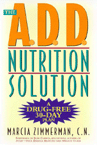 |
Marcia Zimmerman |
CASE STUDIES/OBSERVATIONAL DATA
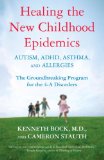 |
Kenneth Bock, MD, & Cameron Stauth |
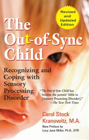 |
Carol Kranowitz |
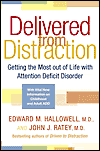 |
Edward M. Hallowell, MD & John Ratey, MD Delivered from Distraction Ballantine / Random House, 2005 Follow-up to best-seller "Driven to Distraction", psychiatrists who have ADD themselves outline strategies mainly for adults with AD/HD to function their best at home, work, raising kids, in relationships, etc. The tone is up-beat, emphasizing aspects of ADD that can be uniquely valuable. Contains a chapter on Nutrition and ADD, and a Q & A summary of major points designed for ADDer's who have trouble getting through an entire book. |
 |
LaVonne Kirkpatrick, Ed.D and Rick Kirkpatrick, MSW |
 |
Robert Hill & Eduardo Castro |
 |
Judyth Reichenberg-Ullman, ND, M.S.W., and Robert Ullman, ND |
 |
Skye Weintraub, MD |
 |
Doris J. Rapp, MD |
 |
Doris J. Rapp, MD, (Ed.) |
[Back to Contents]
RECENT KEY ARTICLES
These can be ordered through PubMed (see Govt. Resources, below), or your local library via inter-library loan.
Molina, BS, Hinshaw, SP, et al. "The MTA at 8 years: prospective follow-up of children treated for combined-type ADHD in a multisite study." Journal of the American Academy of Child & Adolescent Psychiatry. 2009 May;48(5):484-500.
Curtis, LT; Patel, K. "Nutritional and environmental approaches to preventing and treating autism and attention deficit hyperactivity disorder (ADHD): a review." Journal of Alternative and Complementary Medicine, 2008 Jan-Feb;14(1):79-85.
Jensen, PS, Arnold, LE, et al. "3-year follow-up of the NIMH MTA study." J Am Acad Child Adolesc Psychiatry. 2007 Aug;46(8):989-1002.
Weber, W; Newmark, S. "Complementary and alternative medical therapies for attention-deficit/hyperactivity disorder and autism." Pediatric Clinics of North America, 2007 Dec;54(6):983-1006; xii.
Kropotov JD, et al. "ERPs correlates of EEG relative beta training in ADHD children."
Int J Psychophysiol. 2005 Jan;55(1):23-34.
Monastra VJ. "Electroencephalographic biofeedback (neurotherapy) as a treatment for attention deficit hyperactivity disorder: rationale and empirical foundation." Child Adolesc Psychiatr Clin N Am. 2005 Jan;14(1):55-82, vi.
Sinha D., Efron D. "Complementary and alternative medicine use in children with attention deficit hyperactivity disorder." J Paediatr Child Health. 2005 Jan-Feb;41(1-2):23-6.
Richardson, A.J. and Montgomery, P. "The Oxford-Durham Study: A Randomized, Controlled Trial of Dietary Supplementation With Fatty Acids in Children With Developmental Coordination Disorder." Pediatrics, May 2005; 115: 1360 - 1366.
Cho BH, et al. "Neurofeedback training with virtual reality for inattention and impulsiveness." Cyberpsychol Behav. 2004 Oct;7(5):519-26.
Rossiter, T. "The effectiveness of neurofeedback and stimulant drugs in treating AD/HD: part II. Replication." Appl Psychophysiol Biofeedback. 2004 Dec;29(4):233-43.
AUTHORITATIVE RESEARCH RESOURCES
Applied Psychophysiology and Biofeedback
Springer Science, formerly Kluwer Academic Publishers
Journal of Attention Disorders
SAGE Publications
The following alternative and complementary medicine journals contain occasional relevant articles:
Alternative Therapies in Health and Medicine
http://www.alternative-therapies.com
A bimonthly clinical research journal with particular emphasis on mind/body approaches to wellness.
Journal of Alternative and Complementary Medicine
http://www.liebertpub.com/publication.aspx?pub_id=26
This peer-reviewed journal includes clinical trials, observational and analytical reports on treatments outside the realm of allopathic medicine.
CASE STUDIES/OBSERVATIONAL DATA
Latitudes
A publication of the Association for Comprehensive Neurotherapy (ACN)
Explores advanced and alternative treatments for ADHD, autism, Tourette's Syndrome and learning disabilities.
The following alternative and complementary medicine journal contains occasional relevant articles:
Alternative & Complementary Therapies
http://www.liebertpub.com/publication.aspx?pub_id=3
Provides the latest information on evaluating alternative therapies and integrating them into clinical practice.
American Academy of Environmental Medicine (AAEM)
http://www.aaem.com/
6505 E. Central Avenue, Suite 296
Wichita, Kansas 67206
Tel: (316) 684-5500
Fax: (316) 684-5709
Email: administrator@aaem.online.com
Clinicians from various specialties dedicated to the evaluation, management, and prevention of the adverse consequences resulting from environmentally triggered illnesses. Select a state and member type under "Find AAEM Member. "
American Hippotherapy Association (AHA Inc.)
http://www.americanhippotherapyassociation.org/
9919 Towne Road
Carmel, IN 46023
Toll free: (888) 851-4592
Fax: (317) 872-3234
Email: info@americanhippotherapyassociation.org
An affiliate of NARHA (below), members of AHA are physical, occupational or speech therapists who are interested in the utilization of equine movement as a treatment strategy.
Association for Applied Psychophysiology and Biofeedback (AAPB)
http://www.aapb.org
10200 West 44th Avenue, Suite 304
Wheat Ridge, CO 80033
Toll-free: (800) 477-8892
Tel: (303) 422-8436
Email: aapb@resourcenter.com
Professionals trained in neurofeedback and biofeedback.
Center for Science in the Public Interest (CSPI)
http://www.cspinet.org/
1875 Connecticut Ave. N.W.
Suite 300
Washington, D.C. 20009
Tel: (202) 332-9110
Fax: (202) 265-4954
E-mail: cspi@cspinet.org
Canadian Office:
Suite 4550, CTTC Bldg.
1125 Colonel By Drive
Ottawa, Ontario K1S 5R1
CANADA
Tel: (613) 244-7337
Fax: (613) 244 1559
Email: jefferyb@istar.ca
A consumer advocacy organization that conducts innovative research and advocacy programs in health and nutrition, food safety, and sound science and provides consumers with information about their health and well-being. Offers an award-winning newsletter, Nutrition Action Healthletter.
North American Riding for the Handicapped Association, Inc. (NARHA)
http://www.narha.org/
PO Box 33150
Denver, Colorado 80233
Toll-Free: (800) 369-RIDE (7433)
Tel: (303) 452-1212 (VM only)
Fax: (303) 252-4610
Email: NARHA@NARHA.org
Find therapeutic horse ridings centers at this web site.
Optometrists Network
http://www.optometrists.org/
AD/HD pages: http://www.add-adhd.org/
ATTN: Rachel Cooper
93 Bedford Street, Suite 5D
New York, NY 10014
Tel. and Emails: see http://www.optometrists.org/contact_us.html
Site contains much information on vision therapy and other resources for AD/HD and an optometrist directory at: http://www.optometrists.org/eye_doctors.html
The following professional associations provide alternative and complementary medical approaches to a range of health issues:
American Association of Naturopathic Physicians (AANP)
http://naturopathic.org
4435 Wisconsin Ave. NW, Suite 403
Washington, DC 20016
Toll free: (866) 538-2267
Tel: (202) 237-8150
Fax: (202) 237-8152
Email: member.services@naturopathic.org
This organization represents the naturopathic physicians from recognized schools of naturopathy and provides referrals to licensed naturopathic physicians.
Homeopathic Academy of Naturopathic Physicians (HANP)
http://www.hanp.net/
A specialty society within the American Association of Naturopathic Physicians (above).
American Board of Holistic Medicine (ABHM)
http://holisticboard.org
614 Daniel Drive, NE
East Wenachee, WA 98802-4036
Tel: (509) 886-3046
Email: holos@charter.net
Provides referrals to physicians board certified in holistic medicine.
American College for Advancement in Medicine (ACAM)
http://www.acam.org
8001 Irvine Center Drive, Suite 825
Irvine, CA 92618
Toll free: (800) 532-3688
Tel: (949) 309-3520
Fax: (949) 309-3538
Email: via contact form on website
Provides listings of physicians who practice integrative medicine.
American Holistic Medical Association (AHMA)
http://www.holisticmedicine.org
23366 Commerce Park, Suite 101B
Beachwood, OH 44122
Tel: (216) 292-6644
Fax: (216) 292-6688
Email: info@holisticmedicine.org
This organization includes allopathic and osteopathic physicians who practice medicine that acknowledges the interrelationship of body, mind, and spirit. AHMA provides listings of physicians who practice integrative medicine.
SELF-HELP, RESEARCH AND REFERRAL ORGANIZATIONS
Many parents of children with AD/HD, and adults with the disorder, find comfort and a more pro-active, positive attitude by meeting with other parents and peers for networking, information, and support.
Attention Deficit Disorder Association (ADDA)
http://www.add.org/
P.O. Box 7557
Wilmington, DE 19803-9997
Toll free: (800) 939-1019
Fax: (610) 970-7520
Email: adda@jmoadmin.com
Provides information, resources and networking to adults with AD/HD and to the professionals who work with them. Offers the quarterly publication, Focus, and an e-newsletter.
Association for Comprehensive Neurotherapy (ACN)
http://www.latitudes.org
Broken Arrow, OK 74013
Tel: (561) 798-0472
Fax: (561) 798-9820
Email: acn@latitudes.org
Explores advanced and alternative treatments for autism, ADHD, Tourette’s Syndrome and tics, and learning disabilities. Offers e-newsletter and publishes Latitudes magazine.
CHADD - Children & Adults with Attention Deficit/Hyperactivity Disorder
http://www.chadd.org/
8181 Professional Place, Suite 150
Landover, MD 20785
Tel: (301) 306-7070
Fax: (301) 306-7090
Email: options listed on website “contact us” page
Affiliated with the National Resource Center on AD/HD (below), CHADD is a National organization with regional chapters; a source for local support. Publishes Attention! Magazine, available to members only, an e-newsletter, and other publications for professionals, educators, and parents.
Developmental Delay Resources (DDR)
http://www.devdelay.org/
5801 Beacon St.
Pittsburgh, PA 15217
Tel: (800) 497-0944
Fax: (412) 422-1374
Email: devdelay@mindspring.com
Disseminates information about causes and whole-child interventions for ADD, learning disabilities and developmental delays through the quarterly newsletter New Developments, workshops, conferences, library and website. Also offers an extensive listing of books and tapes available to order.
Feingold Association of the United States
http://www.feingold.org/
554 East Main Street, Suite 301
Riverhead, NY 11901
Toll free: (800) 321-3287 (U.S. only)
Tel: (631) 369-9340
Fax: (631) 369-2988
Email: Help@feingold.org
An organization of families and professionals founded by pediatrician and allergist, Dr. Ben Feingold, this non-profit is dedicated to helping children and adults apply proven dietary techniques for better behavior, learning and health.
National Center for Gender Issues and AD/HD
http://www.ncgiadd.org/
3268 Arcadia Place, NW
Washington, DC 20015
Tel: (888) 238-8588
Fax: (202) 966-1561
Email: contact@ncgiadd.org
Founded by Patricia Quinn, MD and Kathleen Nadeau, PhD, to promote awareness, advocacy, and research on AD/HD in women and girls. Primarily conventional medical information, also offers resources on coping strategies for situations particular to women--workplace, home with kids, etc.
National Resource Center on AD/HD
http://www.help4adhd.org/
8181 Professional Place, Suite 150,
Landover, MD 20785
Toll Free: (800) 233-4050
Fax: (301) 306-7090
Affiliated with CHADD (above), the center was established with funding from the CDC to serve as a national clearinghouse for information on AD/HD.
SPD (Sensory Processing Disorder) Foundation
http://www.spdfoundation.net
5655 South Yosemite Street, Suite 305
Greenwood Village, CO 80111
Tel: (303) 794-1182
Fax: (303) 322-5550
Email: via contact form on website
Provides information on sensory processing disorder. Site includes directories of health professionals and local support groups. Conducts research, when funding is available, through the STAR (Sensory Processing Treatment & Research) Center.
TREATMENT CENTERS AND LAB TESTS
This list focuses on clinics and centers that use non-standard tests and treatment protocols.
Genova Diagnostics
http://www.genovadiagnostics.com/
[formerly Great Smokies Lab]
63 Zillicoa Street
Asheville, NC 28801
Tel: (800) 522-4762
Fax: (828) 252-9303
Email: via contact form on web site
Offers "innovative laboratory testing and services for integrative medicine". Click on Tests, then Search by Disease to see laboratory tests available for underlying conditions of AD/HD.
Great Plains Laboratory
http://www.greatplainslaboratory.com/
11813 West 77th
Lenexa, KS 66214
Tel: (913) 341-8949
Fax: (913) 341-6207
Email: gpl4u@aol.com
Directed by Dr. William Shaw, offers organic acid testing , IgE and IgG allergy tests, and other varieties of metabolic tests. See information pages on ADD/ADHD at http://www.greatplainslaboratory.com/adhd.html.
HANDLE Institute
http://www.handle.org/
1300 Dexter Avenue North
110 The Casey Family Building
Seattle, WA 98109
Tel: (206) 204-6000
Fax: (206) 860-3505
Email: support@handle.org
Offers non-drug alternative for diagnosing and treating most neuro-developmental disorders; clinical services, community information, and professional training programs. With regard to AD/HD, "HANDLE has renamed the difficulties many people demonstrate as Attentional Priority Disorder (APD) ... APD is not hereditary or irreversible."
Meridian Valley Laboratory
http://www.meridianvalleylab.com/
801 SW 16th Suite 126
Renton, WA. 98055
Tel: (425) 271-8689
Fax: (425) 271-8674
Email: info@meridianvalleylab.com
Available lab tests include those for gluten sensitivity, food allergies, and hair mineral analyses (lead, mercury, etc.)
MetaMetrix Clinical Laboratory
http://www.metametrix.com/
3425 Corporate Way
Duluth, GA 30096
Toll-free: (800) 221-4640
Tel: (770) 446-5483
Fax: (770) 441-2237
Email: inquiries@metametrix.com
Available tests include organic acids, membrane fatty acids, food allergies, and hair mineral analysis.
Pfeiffer Treatment Center and Health Research Institute
http://www.hriptc.org/
4575 Weaver Parkway
Warrenville, IL 60555-4039
Tel: (630) 505-0300
Fax: (630) 836-0667
Email: info@HRIPTC.org
6230 10th Street, N, #310A
Oakdale, MN 55128
Tel: (651) 209-9282
Fax: (651) 209-9283
Focuses on research, education, and nutritional treatment of biochemical imbalances. The Health Research Institute has a compounding pharmacy.
STAR Center - Sensory Processing Treatment And Research
http://www.starcenter.us/
5655 South Yosemite Street, Suite 305
Greenwood Village, CO 80111
Tel: (303) 221-STAR (7827)
Email: info@STARCenter.us
A research partner with the SPD Foundation (see SPDF in Self-help, Research & Referral Organizations above), the center offers diagnostic and treatment services for sensory processing disorders, including intensive short-term services for out-of-town clients.
Public Information Clearinghouse
http://nccam.nih.gov/health/clearinghouse/
P.O. Box 7923
Gaithersburg, MD 20898-7923
Toll-free: (888) 644-6226
International: (301) 519-3153
TTY: (866) 464-3615
Fax: (301) 495-4957
E-mail: info@nccam.nih.gov
For fact sheets and information with government clearance. The center has funded several exploratory research centers. Offers live online chat Mon-Fri, 8:30 to 5pm EST - see http://www.nccaminfo.org/livehelp/
National Institute of Environmental Health Sciences (NIEHS) Children's Environmental Health Centers
http://www.niehs.nih.gov/research/supported/centers/prevention/index.cfm
NIEHS-sponsored research being conducted at the University of Illinois at Champaign/Urbana suggests that PCB exposure causes symptoms similar to those of ADHD.
PubMed & CAM on PubMed
http://www.ncbi.nlm.nih.gov/PubMed/
Free public access to the National Library of Medicine MEDLINE database of clinical research is available through PubMed and the Related Articles feature. Searches can be tailored to CAM journals only at: http://www.nlm.nih.gov/research/camonpubmed/
Promotional and commercial sites are not included in this listing unless they provide significant impartial information resources.
ADDitudes magazine blog list
http://www.additudemag.com/adhdblogs/
ADDvance
http://www.addvance.com/
Kathleen Nadeau, Ph.D. and Patricia Quinn, M.D. provide answers to questions about ADD (ADHD) for families and individuals at every stage of life from preschool through retirement years.
All Kinds Of Minds
http://www.allkindsofminds.org
Primarily an educational model, this sight was started by Dr. Mel Levine, pediatrician and professor at the University of North Carolina-Chapel Hill, to demonstrate a new way of seeing and working with "quirky" (he avoids diagnostic labels) kids with learning differences.
AltMD Blog, Jed Shlackman: The ADHD - Attention Deficit Disorder Treatment Debate Resumes: What Works?
http://www.altmd.com/Specialists/Counseling-Hypnosis-Reiki-Holistic-Healing/Blog/The-ADHD--Attention-Deficit-Disorder-Treatment-Deb
Bérard Auditory Integration Training (AIT)
http://www.aithelps.com/
http://www.berardaitwebsite.com
Information on training method devised by otolaryngologist, Dr. Guy Bérard, to enhance auditory processing, learning, and behavior. The second site houses the Society for Auditory Intervention Techniques (SAIT) archives.
Brain Gym ®
http://www.braingym.org/
A program of the Educational Kinesiology Foundation to enhance learning through the science of movement.
Feingold Association
http://www.feingold.org/
Dietary intervention programs for numerous disorders.
Healing Center Online - Forum on Alternative and Innovative Therapies
http://www.healing-arts.org/children/index.htm
Written and overseen by Lewis Mehl-Madrona, M.D., Ph.D., in affiliation with the University of Arizona College of Medicine's Program in Integrative Medicine. Click on "ADHD Section".
Interactive Metronome
http://www.interactivemetronome.com/IMPublic/Home.aspx
Treatment based on rhythmic exercises to special music to develop better focus. Endorsed by noted child psychiatrist Dr. Stanley Greenspan of the Interdisciplinary Council on Developmental Learning Disorders (ICDLD).
Latitudes
http://www.latitudes.org
Online magazine, blog, e-newsletter and other resources exploring advanced and alternative treatments for autism, ADHD, Tourette's Syndrome and tics, from the Association for Comprehensive Neurotherapy.
National Resource Center on AD/HD
http://www.help4adhd.org/
A program of CHADD (see Self-help and Referral Organizations), this center was funded by the CDC to be an information clearinghouse. CAM section:
http://www.help4adhd.org/en/treatment/complementary
Includes references to research.
Optometrists Network - AD/HD pages
http://www.add-adhd.org/
Information resources and links go beyond the field of optometry.
RemedyFind--now Revolution Health
http://www.revolutionhealth.com/conditions/mental-behavioral-health/adhd/
Page has links to sections on alternative treatments by a specialist and user-submitted ratings for all treatments (drug, OTC, and non-drug treatments).
Stanford/Wellsphere : Attention Deficit Disorder Medicine Credits
http://stanford.wellsphere.com/wellpage/attention-deficit-disorder-medicine-credits
Blog highlights and articles pertaining to AD/HD.
Tomatis Method auditory integration therapy
http://www.tomatis.com/English/Articles/add_adhd.htm
Developed by French ear-nose-throat specialist Dr. Alfred Tomatis; site has information pages for each disorder this method treats, including AD/HD.

All rights reserved.